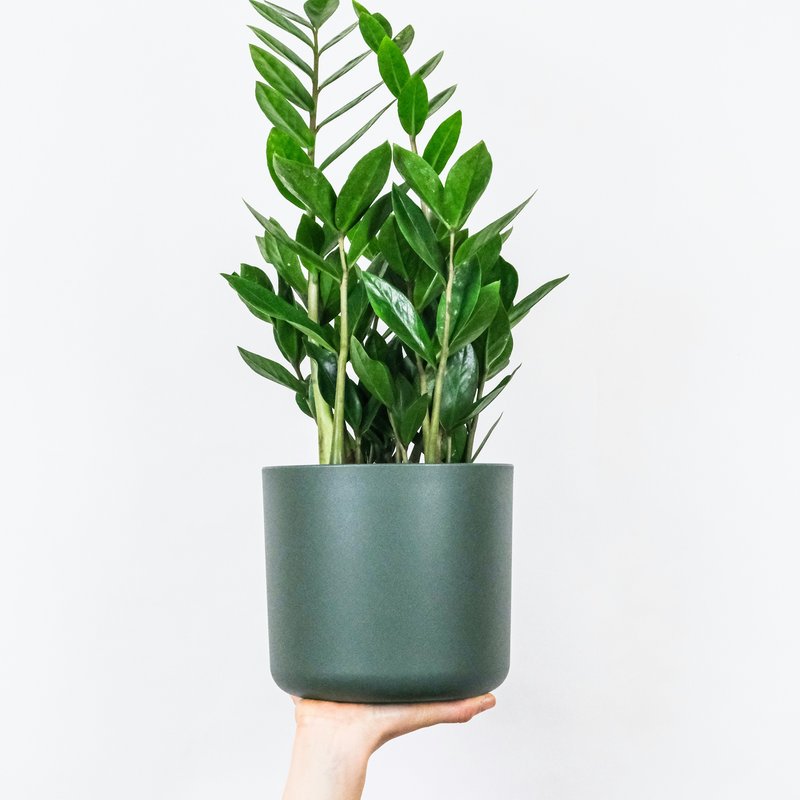
ZZ Plant
Zamioculcas zamiifolia
Thrives in low light and tolerates serious neglect. The rhizomes store water underground, so forgetting to water for a few weeks is totally fine.
Buy this plant $22 In Stock- Light
- Low Light
- Humidity
- 30-50%
- Temperature
- 65-85°F
Light Requirements
Low Light. Handles low light better than most plants, but it'll grow faster with more! A north-facing window works great. Just avoid rooms with zero natural light.
Watering
Every 2-3 weeks in summer, once a month or less in winter. Let the soil dry out completely between waterings. The rhizomes underground store water like little batteries, so forgetting to water is no big deal. Overwatering? That's how you actually kill a ZZ plant.
Humidity
Target humidity: 30-50%. Normal home humidity of 40-50% is usually fine! Just keep it away from heating vents, which dry the air out fast.
Temperature
Keep it between 65-85°F. Watch out for cold drafts from windows in winter and hot air blowing from vents. Most tropical houseplants start struggling below 55°F, and frost will kill them.
Soil and Potting
Standard potting soil mixed 50/50 with perlite, or just use cactus mix. As long as it drains well, the ZZ plant doesn't care. Drainage is really the only thing it's picky about.
Propagation
Division is the fast way: pull the rhizomes apart in spring, make sure each chunk has a stem and some roots, then wait 3-5 days before watering. You can root stem cuttings in water too, but it takes 4-8 weeks and you'll see a tiny rhizome form at the base before any new growth appears. Patience required!
Common Problems
Yellow leaves? You're watering too much. That's the answer about 95% of the time. If your pot is literally cracking, the rhizomes have outgrown it and it's time to repot. These are tough plants. Pests are rare, but check the leaf joints for mealybugs every now and then.
Worth Knowing
- ZZ plants show up in traditional Tanzanian medicine as a remedy for earache and inflammation. The juice of the plant was applied directly to the skin.
- It's the only species in its entire genus. Taxonomically, it's a total loner. Its closest relatives aren't even in the same plant family!
- Dutch nurseries started mass-producing these in the late 1990s, and within ten years they were in every office lobby on the planet. Before that, almost nobody outside East Africa had heard of them.
Toxicity
Toxic to cats, dogs, and humans. All parts contain calcium oxalate crystals, and the sap can irritate your skin. Wear gloves when repotting or trimming!