
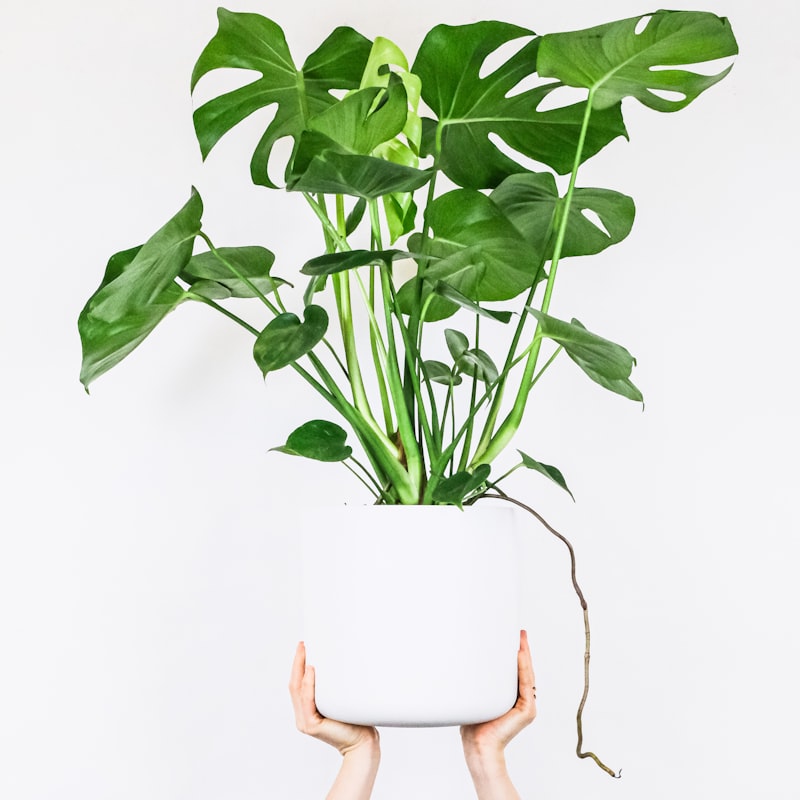
Monstera Deliciosa
Monstera deliciosa
Yes, it actually produces edible fruit! The holes in the leaves develop with age and light exposure, and each new leaf comes out more dramatic than the last.
Buy this plant $28 In Stock- Light
- Bright Indirect
- Humidity
- 40-60%
- Temperature
- 65-85°F
Light Requirements
Bright Indirect. Put it 3-5 feet from a south or east-facing window, out of direct sun. Direct afternoon sun will scorch the leaves!
Watering
Stick your finger 2-3 inches into the soil. Dry? Water it! In summer that's about once a week. Drench it until water runs out the bottom, then leave it alone until it dries out again. The number one Monstera killer isn't neglect, it's people who water on a Tuesday because it's Tuesday.
Humidity
Target humidity: 40-60%. Normal home humidity of 40-50% is usually fine! Just keep it away from heating vents, which dry the air out fast.
Temperature
Keep it between 65-85°F. Watch out for cold drafts from windows in winter and hot air blowing from vents. Most tropical houseplants start struggling below 55°F, and frost will kill them.
Soil and Potting
Equal parts potting soil, orchid bark, and perlite. You want it to drain fast but still hold some moisture. Stay away from those dense, peat-heavy mixes from the hardware store. Your Monstera's roots need to breathe!
Propagation
Find a node (the little bump on the stem), cut just below it, and make sure you've got at least one leaf on the cutting. Pop it in water or moist sphagnum moss somewhere warm and bright. You'll see roots in 4-8 weeks. Once they hit 2-3 inches, move it to soil.
Common Problems
Yellow leaves? You're overwatering. Check the soil before you water, not the calendar! Brown tips usually mean low humidity or fluoride in your tap water. And if you're wondering where the famous holes are, your plant either needs more light or it's just young. Fenestrations don't really show up until the plant is 2-3 years old.
Worth Knowing
- The fruit is real and actually edible when fully ripe! Tastes like a mix of pineapple, banana, and passionfruit. But do not eat it unripe. It's packed with calcium oxalate crystals that will make your mouth feel like you chewed on fiberglass.
- Baby Monsteras in the wild grow toward darkness, not light. They're hunting for a tree trunk to climb. Once they find one, they flip direction and head toward the sun. No other common houseplant does this!
- Nobody actually knows why the leaves have holes. The leading theories: letting light reach lower leaves, reducing wind damage in storms, and mimicking insect damage so herbivores think the plant's already been eaten. Botanists are still arguing about it.
Toxicity
Toxic to cats, dogs, and humans. The calcium oxalate crystals cause mouth irritation and throat swelling if chewed. Most pets learn their lesson after one taste, but keep it out of reach of the curious ones.