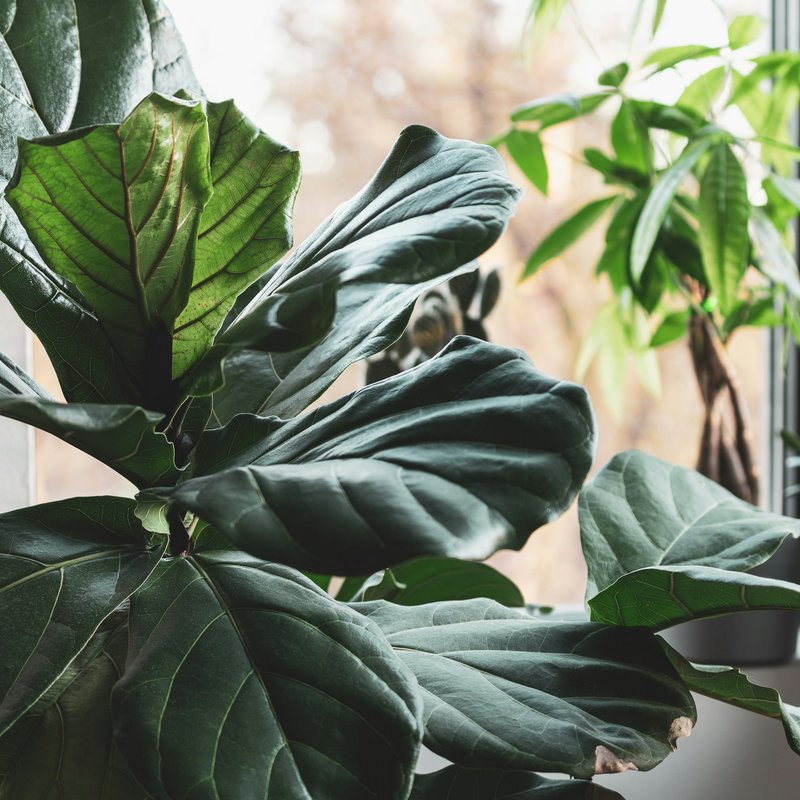
Fiddle Leaf Fig
Ficus lyrata
Pick a spot, put it there, and don't move it. Rewards stability with fast vertical growth and those big, gorgeous leaves. Move it and it will punish you.
Buy this plant $28 In Stock- Light
- Bright Indirect
- Humidity
- 40%+
- Temperature
- 65-80°F
Light Requirements
Bright Indirect. Put it 3-5 feet from a south or east-facing window, out of direct sun. Direct afternoon sun will scorch the leaves!
Watering
Check the top 2 inches of soil. Dry? Water it thoroughly until it drains out the bottom. In warmer months that's roughly every 7-10 days. Here's the thing with fiddle leaf figs: consistency matters more than anything. Pick a rhythm and stick to it. Most problems come from irregular watering.
Humidity
Target humidity: 40%+. Normal home humidity of 40-50% is usually fine! Just keep it away from heating vents, which dry the air out fast.
Temperature
Keep it between 65-80°F. Watch out for cold drafts from windows in winter and hot air blowing from vents. Most tropical houseplants start struggling below 55°F, and frost will kill them.
Soil and Potting
Well-draining mix with some substance to it, pH around 6.0-7.0. Blend peat moss or coco coir with perlite and pine bark. Should hold some moisture but never stay soggy.
Propagation
Snip a stem cutting with 1-2 leaves and a node, put it in room-temp water under bright indirect light, and change the water every few days. Roots take 4-6 weeks. For bigger plants, air layering works better: wound a healthy stem, pack it with moist sphagnum, wrap in plastic, and cut below the new roots after 6-10 weeks.
Common Problems
Dropping leaves for no reason? It was probably moved, hit by a draft, or the temperature changed. Figure out the cause and stabilize it before you do anything else. Brown spots in the middle of leaves (not the edges) point to a bacterial infection, usually from overwatering.
Worth Knowing
- In the wild in West Africa, fiddle leaf figs start life as hemi-epiphytes. Seeds land in the tree canopy, germinate up there, and send roots all the way down to the ground. Sometimes the roots strangle the host tree on the way down. Nature is metal.
- The name 'lyrata' means lyre-shaped, referring to the leaf. A lyre is basically a small harp. And a fiddle is a violin. So the common name is just a different musical translation of the Latin name!
- This plant calibrates itself to the exact light, temperature, and humidity of its spot. Move it across the room and it drops leaves like it's filing a grievance. Find a good spot and treat it like furniture. It's the most dramatic roommate you'll ever have.
Toxicity
Toxic to cats and dogs. The sap has calcium oxalate crystals plus ficin, a protein-dissolving enzyme that can irritate skin on contact and cause stomach problems if eaten.