
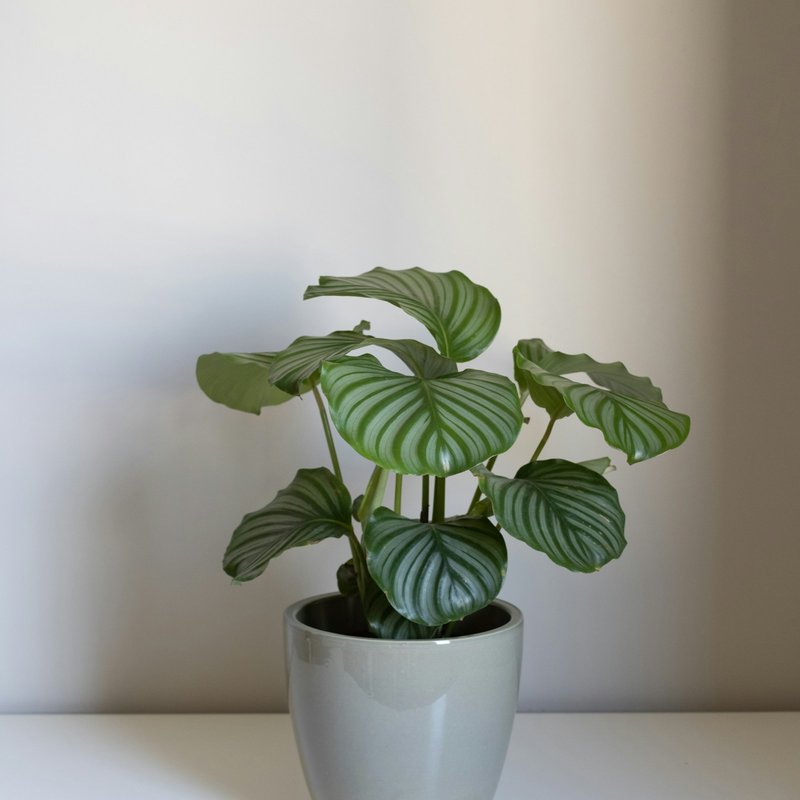
Calathea Orbifolia
Goeppertia orbifolia
The leaves fold up at night like they're going to sleep, which is charming until you realize this plant will throw a fit if you look at it wrong. Available seasonally because we only sell specimens we're confident in.
Buy this plant $22 Seasonal- Light
- Medium Light
- Humidity
- 60%+
- Temperature
- 65-75°F
Light Requirements
Medium Light. Does well in spots that get indirect light most of the day. A few feet back from a bright window, or right near an east-facing one!
Watering
Keep the soil moist but not wet. Water when the top half inch has dried out. And here's the part most people skip: use distilled water, rainwater, or at least tap water that's sat out overnight. Orbifolia is extremely sensitive to fluoride and chlorine. Doing everything right and still getting brown tips? It's your water.
Humidity
Target humidity: 60%+. Get a humidifier. Seriously! Pebble trays and misting barely make a dent compared to even a cheap ultrasonic humidifier placed near the plant.
Temperature
Keep it between 65-75°F. Watch out for cold drafts from windows in winter and hot air blowing from vents. Most tropical houseplants start struggling below 55°F, and frost will kill them.
Soil and Potting
Equal parts coconut coir (or peat moss), perlite, and vermiculite. Needs to hold moisture without turning into a swamp. Throw some clay pebbles at the bottom of the pot for extra drainage.
Propagation
Division is your only option, and spring is the time. Unpot the plant, find natural separations in the root ball, and gently pull them apart. Each piece needs roots and at least one stem. Repot in fresh mix and cover with clear plastic for a week or two while it recovers.
Common Problems
Brown tips? Nine times out of ten it's your tap water. Calatheas hate fluoride and chlorine. Use filtered water, or let tap water sit out overnight so the chlorine evaporates. If it's not the water, your humidity is probably below 60%. This plant will let you know something is wrong within a day or two. There's a reason growers call it Dramathea.
Worth Knowing
- The leaves fold upward at night! It's called nyctinasty, driven by water pressure changes in specialized motor cells at the base of each leaf. The whole Marantaceae family does this, which is why they're called prayer plants.
- This species wasn't officially described until 1982 by botanist Helen Kennedy. In botanical terms, that's basically yesterday. Then in 2012 the whole genus got renamed from Calathea to Goeppertia. So if you see either name, it's the same plant!
- Plant people call it Dramathea because it reacts to the smallest changes like a teenager who just found out the WiFi is down. Switch water brands? Brown tips in 24 hours. Humidity dip? Curled leaves by morning. It keeps you honest.
Toxicity
Non-toxic to cats, dogs, and humans! One of the few plants on this page that's completely safe for a house full of curious pets.