Anthurium Clarinervium
Anthurium clarinervium
Grows on limestone rocks in Chiapas, Mexico, not in soil. Its rock-dwelling origins make it tougher than most aroids and it actually prefers to dry out a bit between waterings.
Buy this plant $45 In Stock- Light
- Bright Indirect
- Humidity
- 60-80%
- Temperature
- 65-73°F
Light Requirements
Bright Indirect. Put it 3-5 feet from a south or east-facing window, out of direct sun. Direct afternoon sun will scorch the leaves!
Watering
Let the soil dry about 80% before watering again. That's drier than most aroids prefer! In summer, roughly every 5-7 days. In winter, every 10-14 days. Use room-temp filtered or rainwater. Cold tap water shocks the roots and you'll see the damage in the leaves.
Humidity
Target humidity: 60-80%. Get a humidifier. Seriously! Pebble trays and misting barely make a dent compared to even a cheap ultrasonic humidifier placed near the plant.
Temperature
Keep it between 65-73°F. Watch out for cold drafts from windows in winter and hot air blowing from vents. Most tropical houseplants start struggling below 55°F, and frost will kill them.
Soil and Potting
Aroid mix with orchid bark, peat moss or coco coir, and perlite. Charcoal or pumice is a nice addition. Target pH 5.5-6.5. In the wild this thing grows on calcium-rich limestone, so its roots want fast drainage and some mineral content.
Propagation
Division at repotting time in spring is the safest bet. Make sure each section has healthy roots and a few leaves, pot in fresh aroid mix, and keep humidity high for a couple weeks while it settles in. Stem cuttings work too. Just let the cut dry for a few hours first.
Common Problems
Brown tips are the number one complaint. Usually it's low humidity or underwatering. And don't panic about slow growth! One new leaf every 3-6 weeks is totally normal. It's not stalled, it's just slow. The humidity this plant likes also attracts spider mites and fungus gnats, so check regularly!
Worth Knowing
- This plant grows on limestone rocks in wet forests in Chiapas, Mexico. It's a lithophyte, not an epiphyte. That's why it's tougher than most anthuriums and does great in chunky, fast-draining soil.
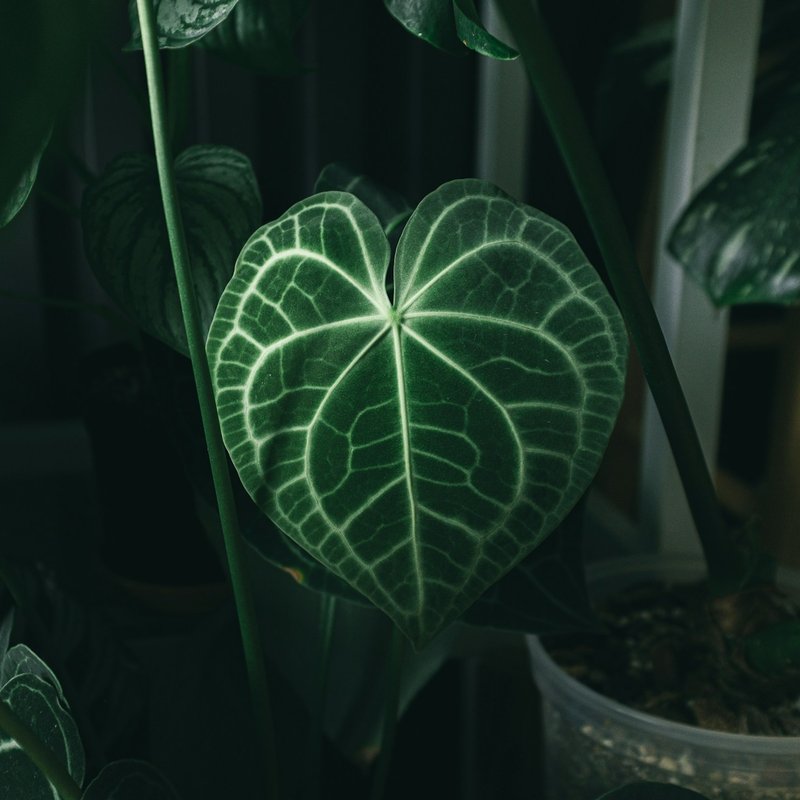
- The leaves are so thick that people call it the velvet cardboard anthurium. That thickness isn't just for looks. It's an adaptation for storing water between rain events on exposed rock faces. Form follows function!
- The name clarinervium is Latin for 'clear-veined,' which is about as straightforward as botanical naming gets. Formally described in 1950, but people in Mexico had been growing it for way longer.
Toxicity
Toxic to cats, dogs, and humans. Contains calcium oxalate crystals causing mouth irritation, drooling, and stomach upset.